What is an afghan
Afghan is a traditional term for a crocheted or knitted blanket, originally inspired by textiles from Afghanistan. Today the term is used generally for any crocheted blanket — from single-color made with simple rows to multicolored patchwork made from granny squares.
Techniques for crocheted afghans
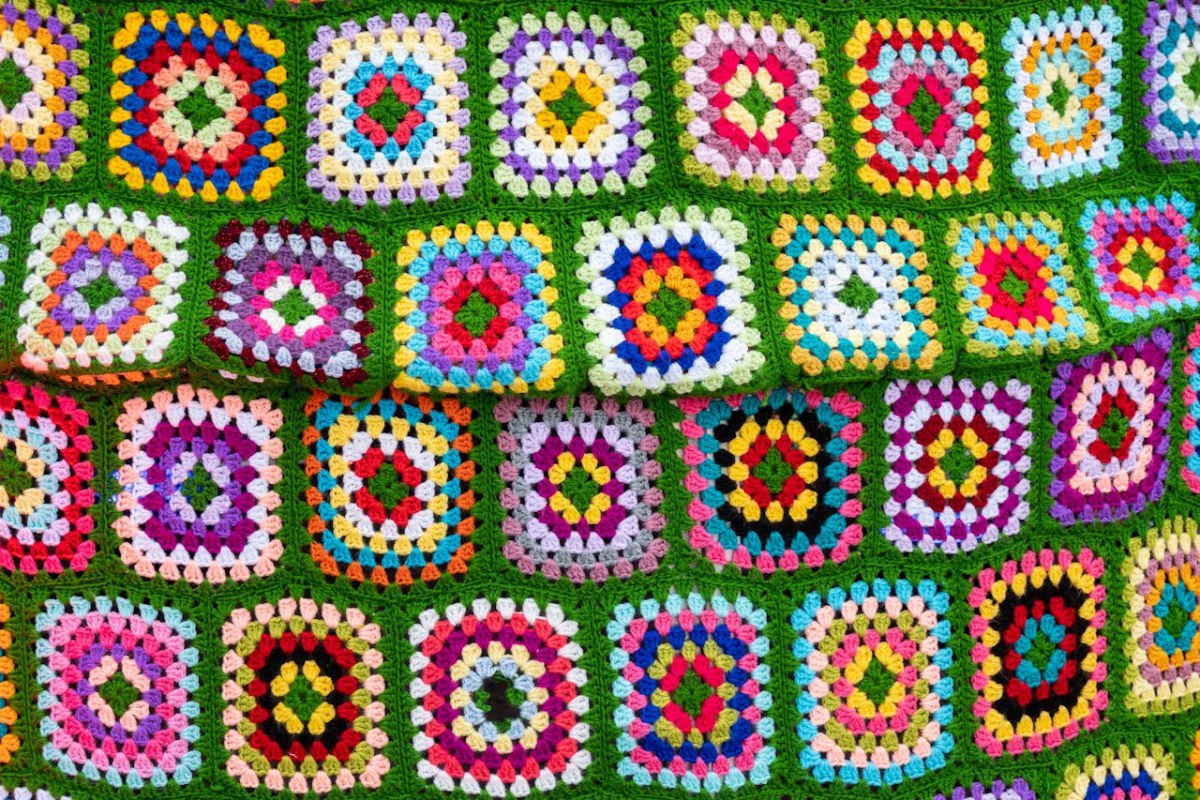
Granny square afghan
The most classic approach — you crochet dozens of squares (typically 6–8 inches) and join them together. Advantages: you can crochet anywhere (traveling, waiting room), each square is quick, and you can combine colors and patterns. Disadvantage: joining and weaving in ends takes time.
Row by row afghan
Entire afghan crocheted in one piece — row after row. Simple stitches (single crochet, half double crochet, or combinations). Advantage: no joining required. Disadvantage: you carry the entire afghan with you and the work becomes heavy toward the end.
Corner to corner (C2C)
Afghan crocheted diagonally — you start from one corner and expand outward. Each "square" is a group of stitches. After reaching the desired width, you begin decreasing toward the opposite corner. Great for pixel art patterns — images, landscapes, characters.
Ripple afghan (ripple / chevron)
Row afghan with regular increases and decreases that create waves or zigzag patterns. Popular for multicolored afghans with gradients.
Yarn selection for afghans
Acrylic — most common choice. Affordable, machine washable, hypoallergenic. Disadvantage: less pleasant to touch than natural fibers.
Cotton — pleasant, cooling. Suitable for summer throws and baby afghans. Disadvantage: heavier and less stretchy.
Blends — cotton/acrylic or wool/acrylic. Compromise between comfort and practicality.
Afghan sizes
| Type | Size (inches) | Granny squares (6 inch) |
|---|---|---|
| Baby/stroller | 30 × 40 | 5 × 7 = 35 pieces |
| Couch throw | 48 × 60 | 8 × 10 = 80 pieces |
| Twin bed | 60 × 80 | 10 × 13 = 130 pieces |
| Double bed | 80 × 88 | 13 × 15 = 195 pieces |
Tips for large projects
Buy all yarn at once — colors differ between production batches (lot numbers). If you buy gradually, you may find that the next skein has a slightly different shade.
Measure as you go — after every 10–20 rows, measure the width. If the afghan is expanding or contracting, you have a stitch count problem.
Weave in ends as you go — leaving weaving for the end means hours of work with a needle. With a multicolored afghan, there can be hundreds of ends.