What is Double Crochet
Double crochet (abbreviated dc) is one of the most basic and commonly used crochet stitches. It's approximately twice as tall as single crochet, which means your work grows faster and the resulting texture is more airy and flexible.
Double crochet is the foundation of granny squares, most crocheted blankets, scarves, garments, and decorations. If you're learning to crochet, after single crochet, double crochet is the second most important stitch you should master.
Note on terminology: American "double crochet" corresponds to British "treble crochet". This article uses American terminology — double crochet = tall stitch with one yarn over.
How to Crochet Double Crochet — Instructions
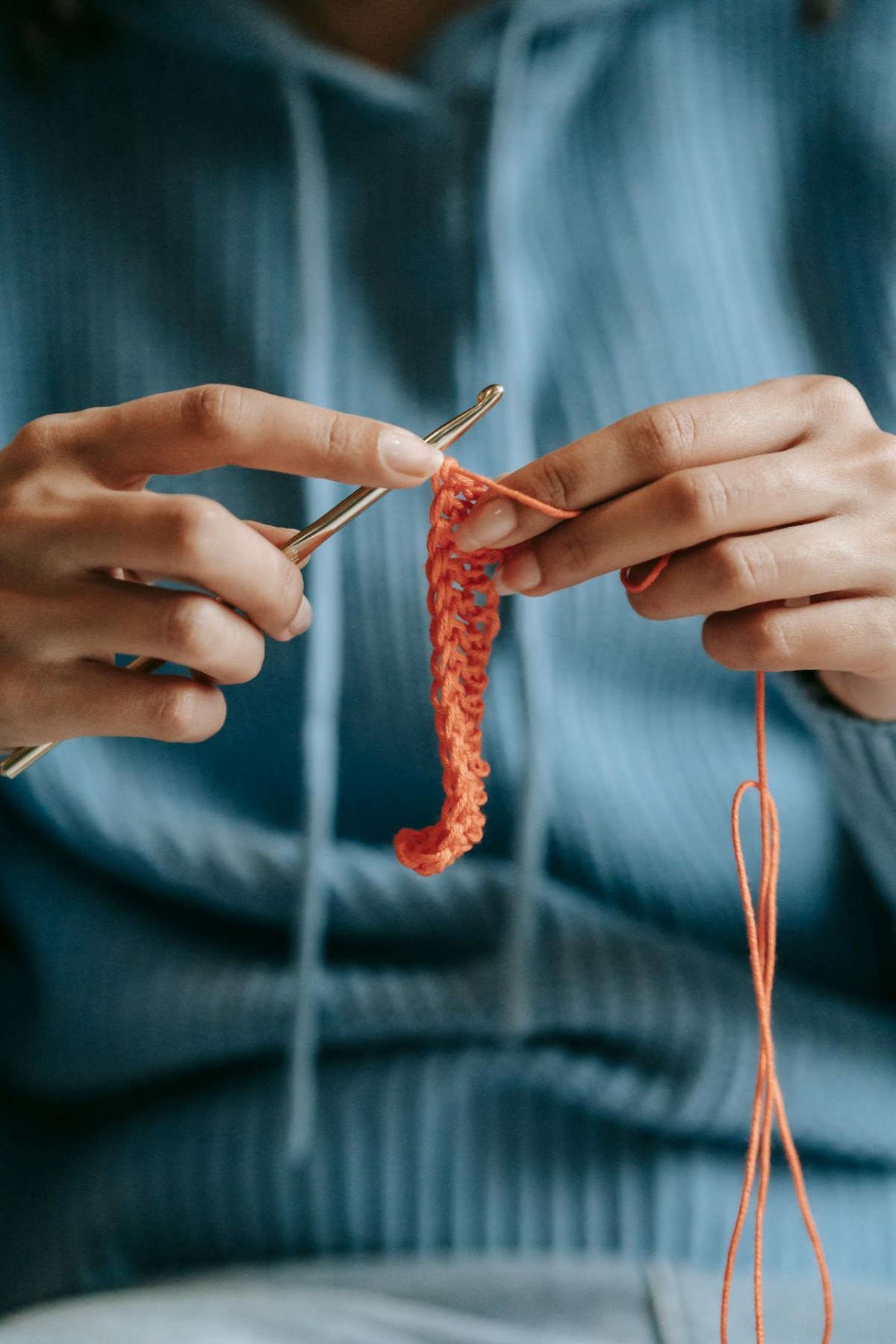
Step 1: Yarn Over
Yarn over around the hook. You have 2 loops on your hook.
Step 2: Insert Hook
Insert the hook into the next stitch in the row. In a foundation chain, the first double crochet is worked into the fourth chain from the hook (the first 3 chain stitches replace the height of the stitch).
Step 3: Draw Through Loop
Catch the yarn and pull it through the stitch. You have 3 loops on your hook.
Step 4: First Pull Through
Catch the yarn and pull it through the first two loops on the hook. 2 loops remain on the hook.
Step 5: Second Pull Through
Catch the yarn again and pull it through the remaining two loops. 1 loop remains on the hook. The double crochet is complete.
Difference from Half Double Crochet
The key difference is in pulling through. With half double crochet, you pull the yarn through all three loops at once. With double crochet, you pull through two at a time — twice. The result is a taller stitch with different texture. Double crochet has a clearly defined "V" shape at the top and is more airy.
Where Double Crochet is Used
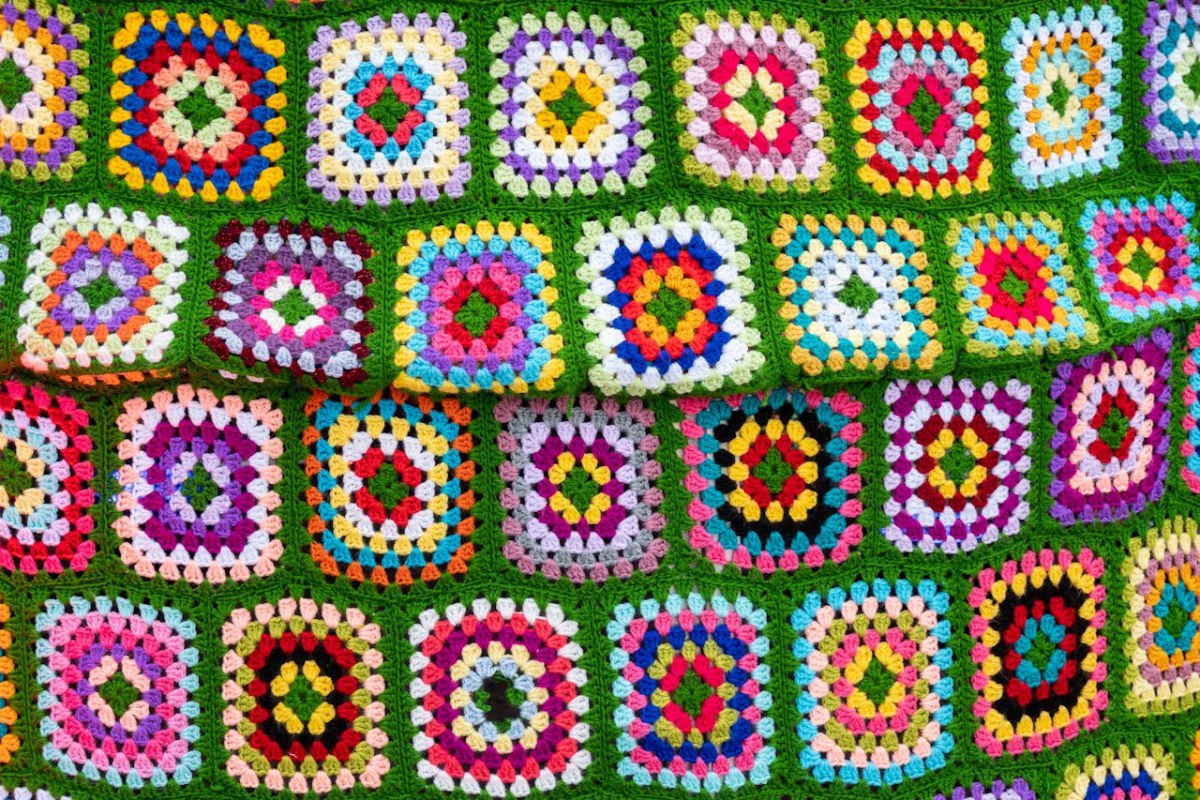
Granny Square — the foundation of classic granny squares consists of groups of 3 double crochets separated by chain spaces. No granny square exists without double crochet.
Crocheted Blankets — rows of double crochets create an even, flowing texture. Work grows quickly due to the height of the stitch.
Garments — sweaters, cardigans, vests. The airy texture of double crochet is comfortable to wear and has good drape.
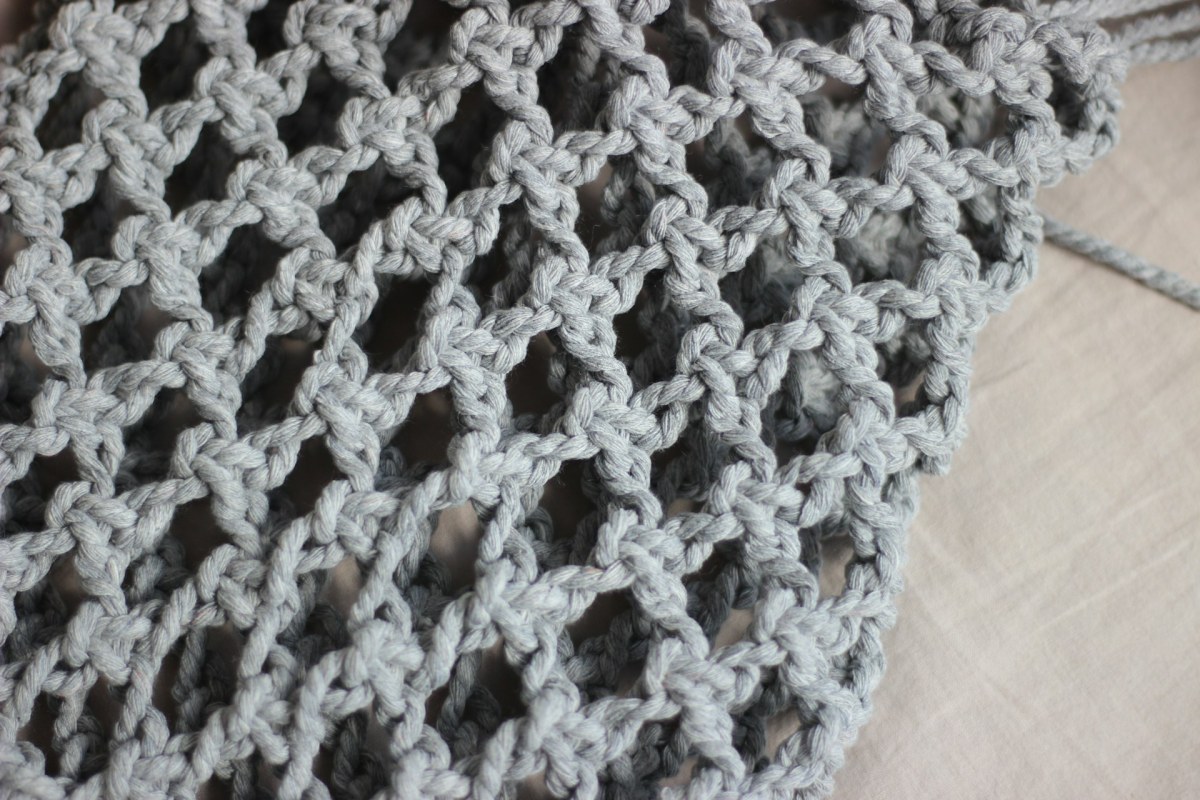
Lace Patterns — combination of double crochets and chain spaces creates lacy patterns for shawls, tablecloths, and curtains.
Double Crochet Variations
Front Post Double Crochet (FPdc) — insert the hook around the post of the stitch in the previous row from the front. The stitch protrudes forward and creates a dimensional effect. Foundation for crocheted cables and ribbed patterns.
Back Post Double Crochet (BPdc) — same principle, but insert the hook from behind. The stitch recedes backward. Combination of front and back post double crochet creates ribbing similar to knitting.
Crossed Stitches — two double crochets where the second is worked into the stitch before the first (skip one stitch, make a double crochet, return to the skipped stitch). Creates a decorative crossed pattern.
V-stitch — work (1 double crochet, 1 chain, 1 double crochet) into one stitch. Creates a V shape. Airy pattern popular for shawls and summer garments.
Tips for Straight Edges
At the beginning of a row, crochet 3 chain stitches as a replacement for the first double crochet (sometimes 2 is enough, depending on yarn and tension). At the end of the row, work the last stitch into the third chain from the previous row — not the second, not the first stitch. This is where most uneven edges occur for beginners.
If your edges are still wavy, try the standing double crochet technique instead of the chain substitute — start the row directly with a double crochet without chains.