What is Tunisian Crochet
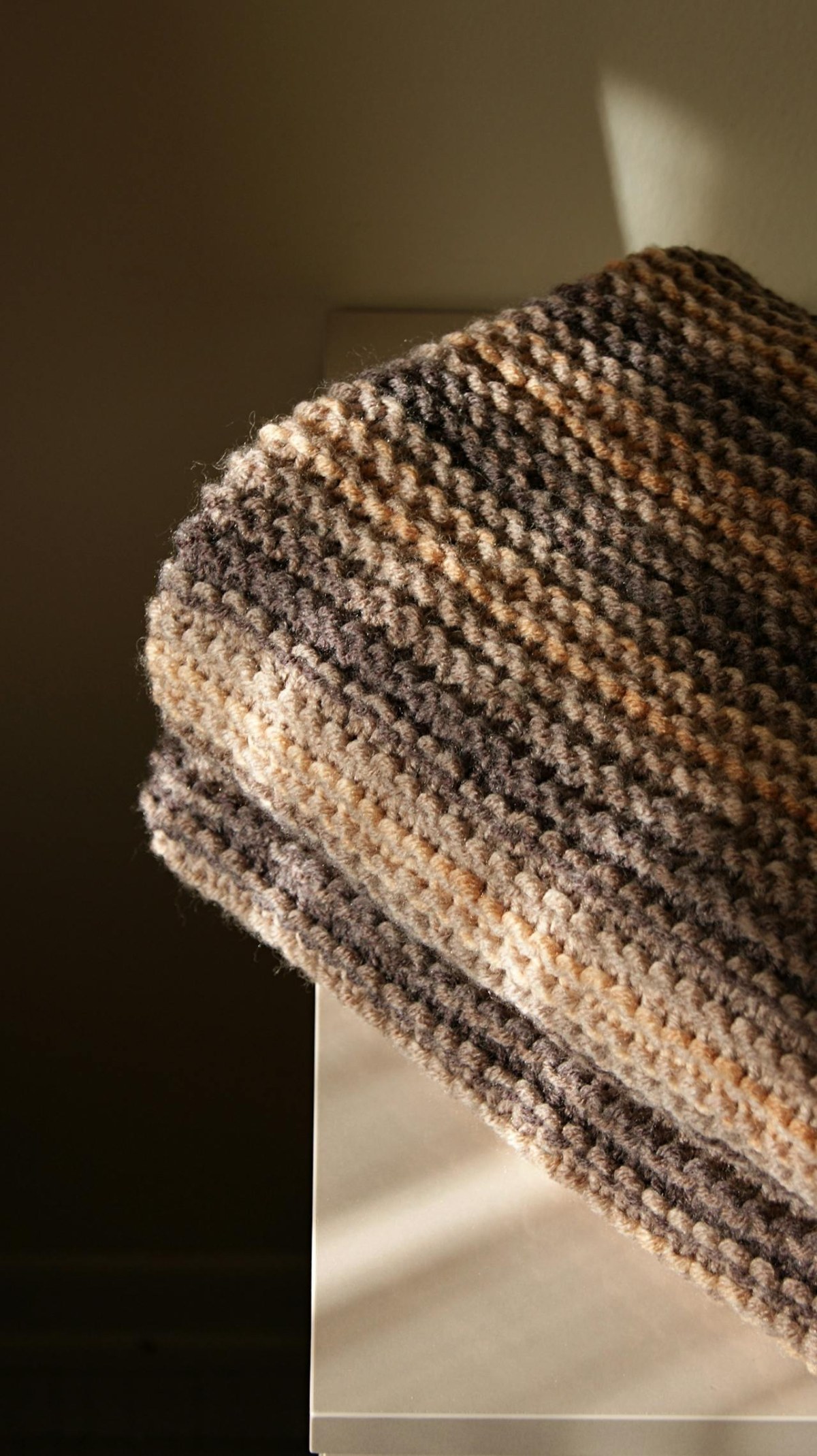
Tunisian crochet (also called Afghan crochet) is a technique that bridges traditional crochet and knitting. It uses a special long hook with a stopper at the end (Tunisian hook) and work is done in two passes — forward and return. The resulting texture is denser than regular crochet and resembles woven fabric.
Tunisian crochet is sometimes called "afghan crochet" because it was traditionally used to make Afghan blankets. Today you'll find it used in blankets, shawls, pillows, and garments.
What You Need
Tunisian hook — longer than a regular hook (12–16 inches) with a straight shaft and stopper at the end to prevent stitches from falling off. There are also hooks with cables (like circular needles) for wide projects. Choose a size 1–2 sizes larger than the yarn recommends — Tunisian crochet tends to be denser.
Yarn — any yarn works, but smooth yarn (cotton, acrylic, merino) better shows stitch structure. Avoid overly fuzzy yarn for first projects.
Basic Tunisian Simple Stitch (TSS)
Forward Pass
Start with a chain of desired length. Insert hook into second chain from hook, yarn over and pull up a loop — leave it on the hook. Repeat for each chain stitch to the end. At the end of the forward pass, you have as many loops on your hook as you have stitches.
Return Pass
Yarn over and pull through the first loop on the hook. Then repeatedly yarn over and pull through two loops — until the end of the row, when 1 loop remains on the hook. The return pass always looks the same, regardless of stitch type.
Subsequent Rows
For the forward pass of subsequent rows, insert your hook under the vertical bar of the previous row, pull up a loop and leave on hook. Repeat to the end. The return pass is always the same.
Other Tunisian Stitches
Tunisian Knit Stitch (TKS) — insert hook between vertical bars (into the space) instead of under them. The texture resembles knitting — smooth "V"s on the right side. Popular for sweaters and shawls.
Tunisian Purl Stitch (TPS) — bring yarn to front (in front of work), insert hook under vertical bar as in TSS. The texture resembles the wrong side of knitting. Combining TKS and TPS creates patterns similar to knitted fabric.
Tunisian Full Stitch — insert hook into the complete stitch (under the vertical bar and behind the horizontal thread behind it). Denser texture, suitable for blankets and mats.
Why Tunisian Work Curls and How to Fix It
Tunisian crochet has a typical problem — finished work curls. This is caused by uneven tension between the forward and return passes. Solutions:
Larger hook — the simplest solution. Try a hook 1–2 sizes larger than for regular crochet with the same yarn.
Blocking — soak the finished item in lukewarm water, squeeze in a towel and pin to a mat in the correct shape. It holds its shape after drying.
Stitch combinations — alternate TSS and TPS (like knit and purl stitches in knitting). The tension evens out and the work doesn't curl.
Beginner Projects
Scarf — straight rows back and forth are ideal for Tunisian crochet. Try a scarf in TKS stitch — it will look knitted.
Pot holder — a small square in basic TSS stitch. Quick project to practice the technique.
Strip blanket — crochet long strips in different stitches and colors, then sew them together. Strips don't curl as dramatically as wide pieces.
Tunisian Crochet vs. Regular Crochet
| Property | Tunisian Crochet | Regular Crochet |
|---|---|---|
| Hook | Long, with stopper | Short, standard |
| Passes | 2 (forward + return) | 1 pass = 1 row |
| Texture | Dense, fabric-like | Depends on stitch |
| Curling | Yes (fixable) | Minimal |
| Yarn consumption | Higher | Lower |