What is a circular knitting machine
A circular knitting machine (also called cranking machine) is a mechanical device with needles arranged in a circle that knits by turning a crank. Unlike hand knitting with needles, the machine creates stitches automatically — you just turn the crank and feed the yarn. Work progresses many times faster than by hand.
Home circular knitting machines (hobby machines) are popular for making hats, socks, cowls and tubes. These are not industrial machines — they are small, portable and affordable (from 1,000 CZK).
How it works
The machine has metal or plastic needles arranged in a circle on a cylinder. By turning the crank, the needles move up and down in sequence. Each needle catches the yarn, pulls it through the old loop and creates a new loop. One turn of the crank completes a full round — on a machine with 48 needles, 48 stitches are created per turn.
Types of home machines
Plastic (Sentro, JAMIT, Addi Express) — affordable (1,000–5,000 CZK), lightweight, suitable for beginners. Plastic needles are less precise and durable, but sufficient for hobby projects.
Metal (Erlbacher, Addi Express Professional) — more expensive (5,000–15,000 CZK), metal needles, more precise stitches. For more demanding users and finer yarns.
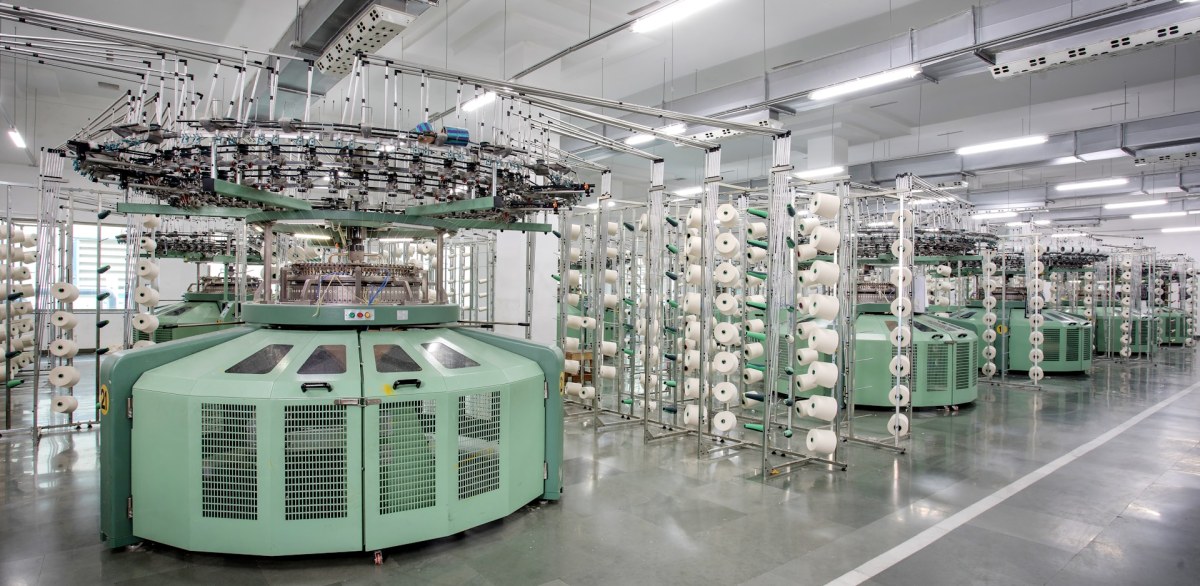
Industrial/semi-professional — significantly more expensive, more needles, electronic pattern control. For small-scale production.
What you can knit
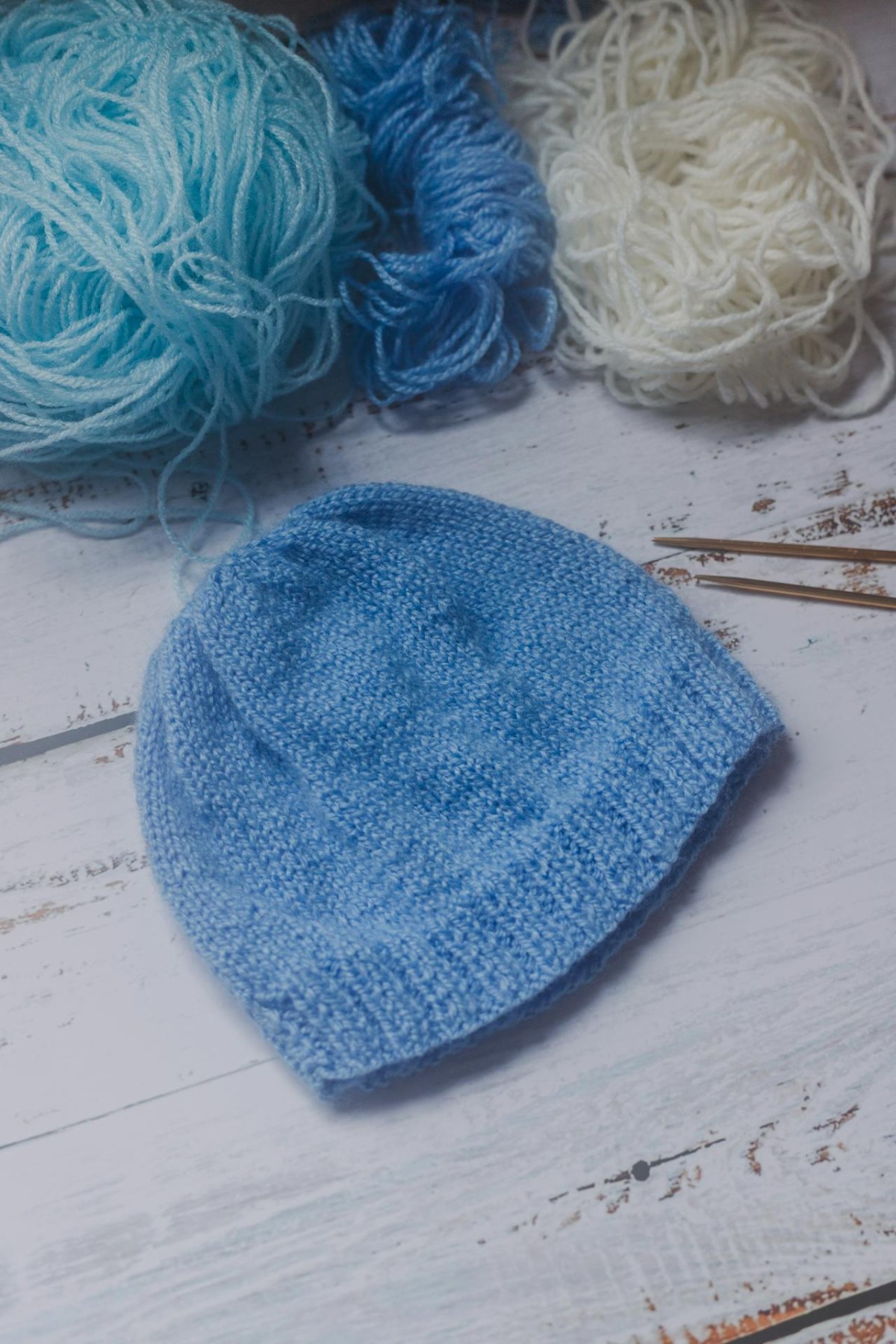
Hats — the most common project. Knit a tube, gather the top. You have a hat in 10–15 minutes.
Cowls — short tube, sew or tie the ends together.
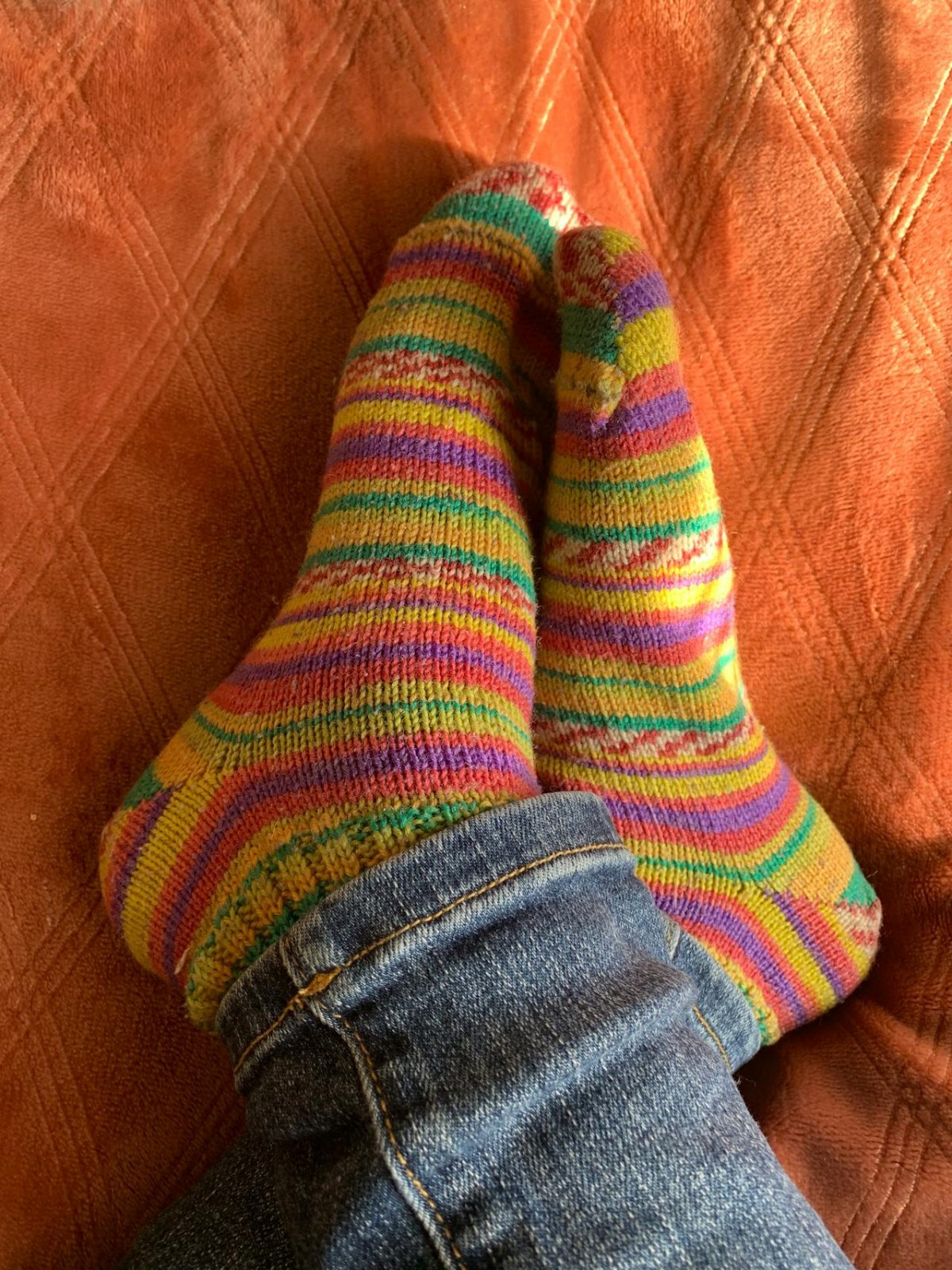
Socks — requires a machine with smaller diameter. The heel is often finished by hand.
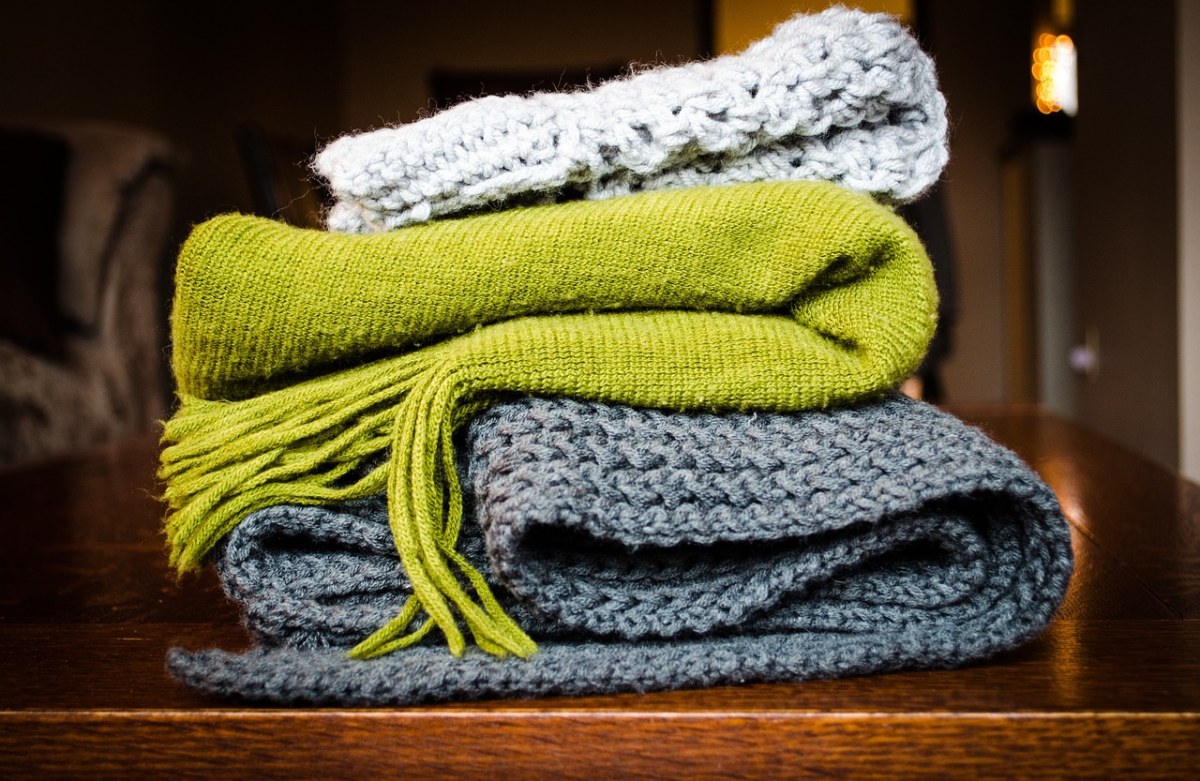
Scarves — knit a tube and cut it (steek) or knit on a machine with flatbed attachment.
Limitations
A circular machine only knits stockinette stitch in the round. You cannot knit cables, lace or complex patterns. Color changes are possible (stripes), but jacquard or intarsia are not. For more complex patterns you need a flat knitting machine (flatbed machine).
Tips for beginners
Start with smooth, medium-weight yarn (worsted weight, acrylic). Yarn that's too thin falls off the needles, yarn that's too thick gets stuck. Turn the crank smoothly and evenly — jerky movements cause dropped stitches. Set proper yarn tension — too loose = uneven stitches, too tight = needles jam.