Two Worlds of Knitting
Machine knitting and hand knitting are two distinct disciplines with a common foundation — both create a knitted fabric from loops of yarn. But the approach, experience, result and investment differ significantly. This article will help you decide what the right choice is for you — or whether you want both.
Comparison
| Property | Hand Knitting | Machine Knitting |
|---|---|---|
| Speed | Slow (hat: 3–6 hours) | Fast (hat: 10–30 minutes) |
| Investment | Low (needles £4–£20) | Medium–high (£20–£3,000) |
| Portability | Anywhere | Home only (table) |
| Patterns | Unlimited (cables, lace, 3D) | Limited by machine type |
| Evenness | Hand-crafted "character" | Perfect uniformity |
| Yarn | Any | Limited (smooth, correct weight) |
| Learning | Simple basics | Technical learning curve |
| Relaxation | Meditative, therapeutic | More technical, production-oriented |
| Error correction | Easy to unravel | More complex (dropped stitches) |
| Production | One piece = hours | Small-batch production possible |
When to Choose Hand Knitting
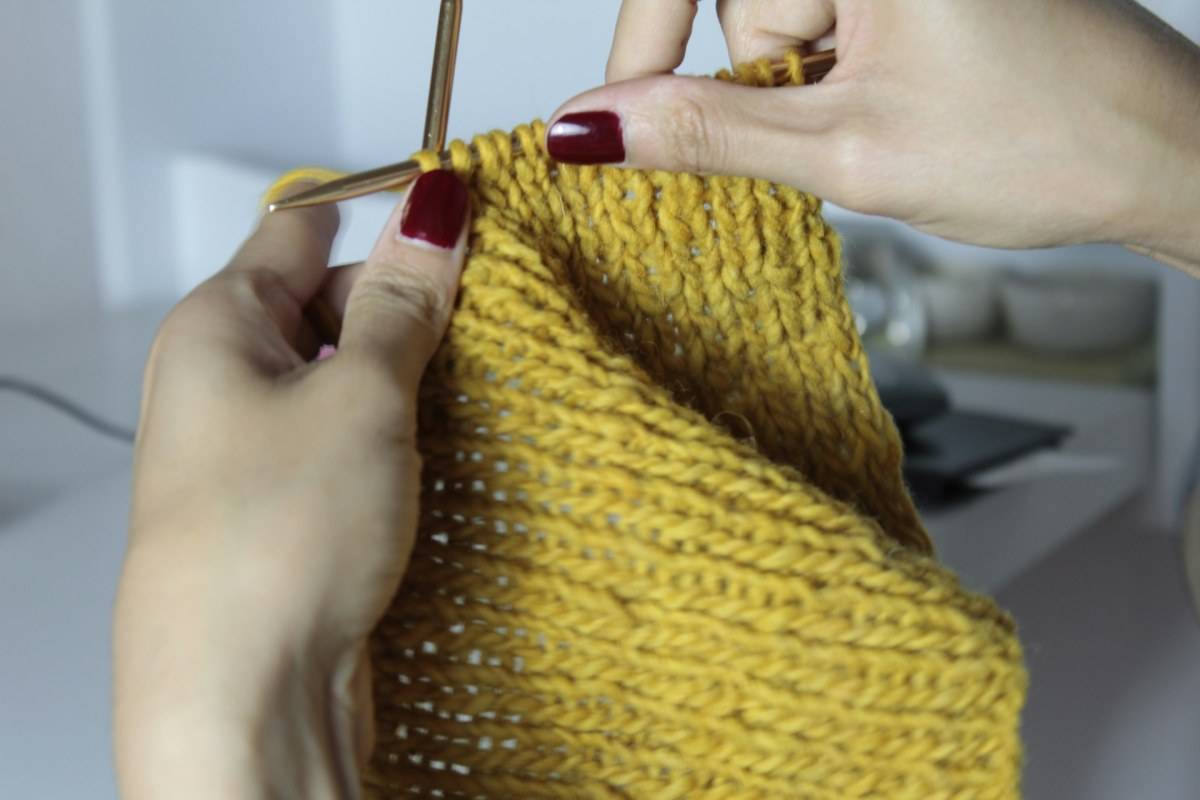
You want to relax — hand knitting is meditative. The rhythmic movement of the needles reduces stress and anxiety. Knit while watching TV, travelling or sitting in a waiting room.
You want to knit complex patterns — cables, lace, brioche, intarsia, 3D textures. A machine cannot handle most of these.
You knit one-off pieces — one jumper, one scarf. Investing in a machine is not worth it.
You want to experiment with yarn — by hand you can knit anything from any yarn. A machine requires a specific weight and smooth surface.
When to Choose Machine Knitting
You want to produce — gifts, selling at markets, small runs. 10 hats in an evening instead of a week.
You want uniformity — a professional look without irregularities.
You mostly knit stocking stitch — if the majority of your projects are in plain stocking stitch, a machine will save you hours.
You have health limitations — arthritis, carpal tunnel syndrome. Turning a handle is gentler than hours with needles.
Combining Both
Many knitters combine both approaches. They knit the basic panels on the machine (back, front piece) and add cables, lace edgings or other details by hand. The machine provides speed, the hands provide character. This is probably the most efficient approach for those who want to knit garments.