What patterns a machine can do
A knitting machine is not limited to plain stockinette stitch. The types of patterns depend on the type of machine — from simple stripes on a circular machine to complex jacquard patterns on an electronic flat-bed machine.
Basic stitches
Stockinette stitch
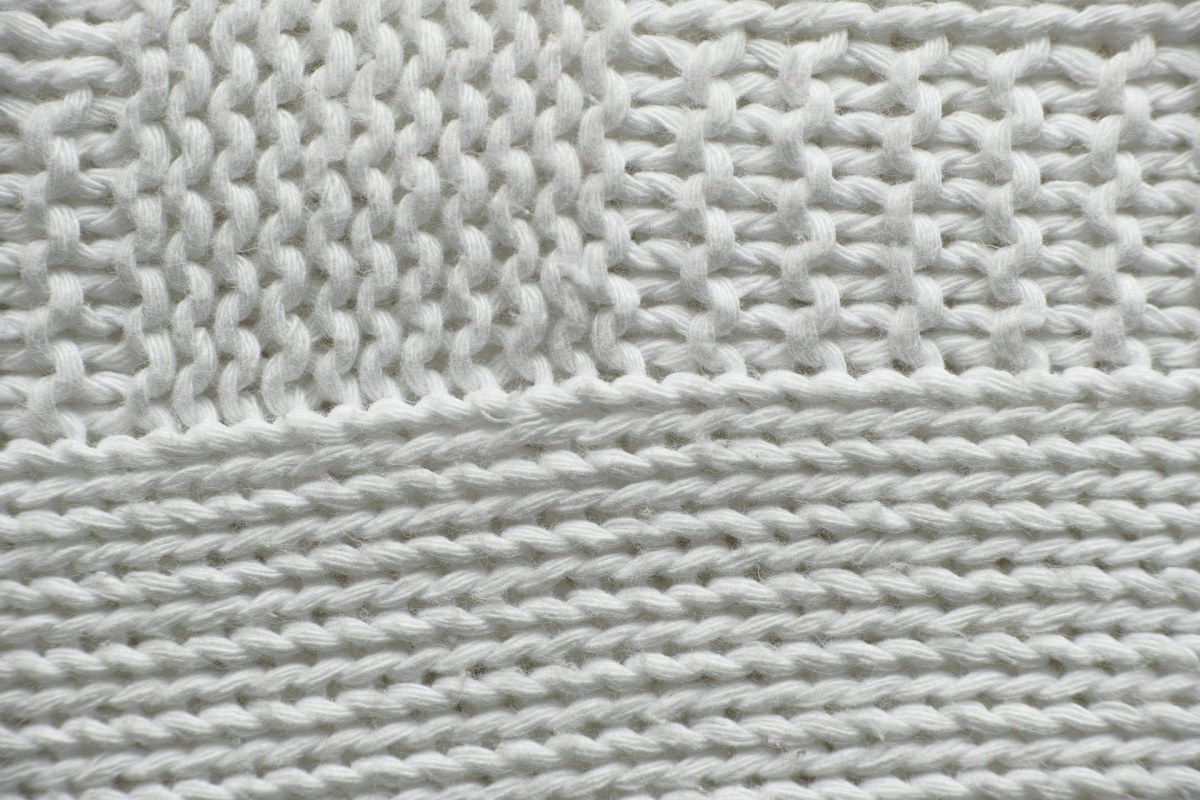
The basic stitch — all knit stitches on one side, purl on the other. Every knitting machine can do this. On a circular machine it forms automatically.
Ribbing (rib)
Requires a double-bed machine — the front bed knits knit stitches, the back bed knits purl stitches. By alternating needles on both beds, 1×1, 2×2, or other ribbing is produced. On a single-bed machine, true ribbing is not possible — it is simulated by transferring stitches (mock rib).
Stripes
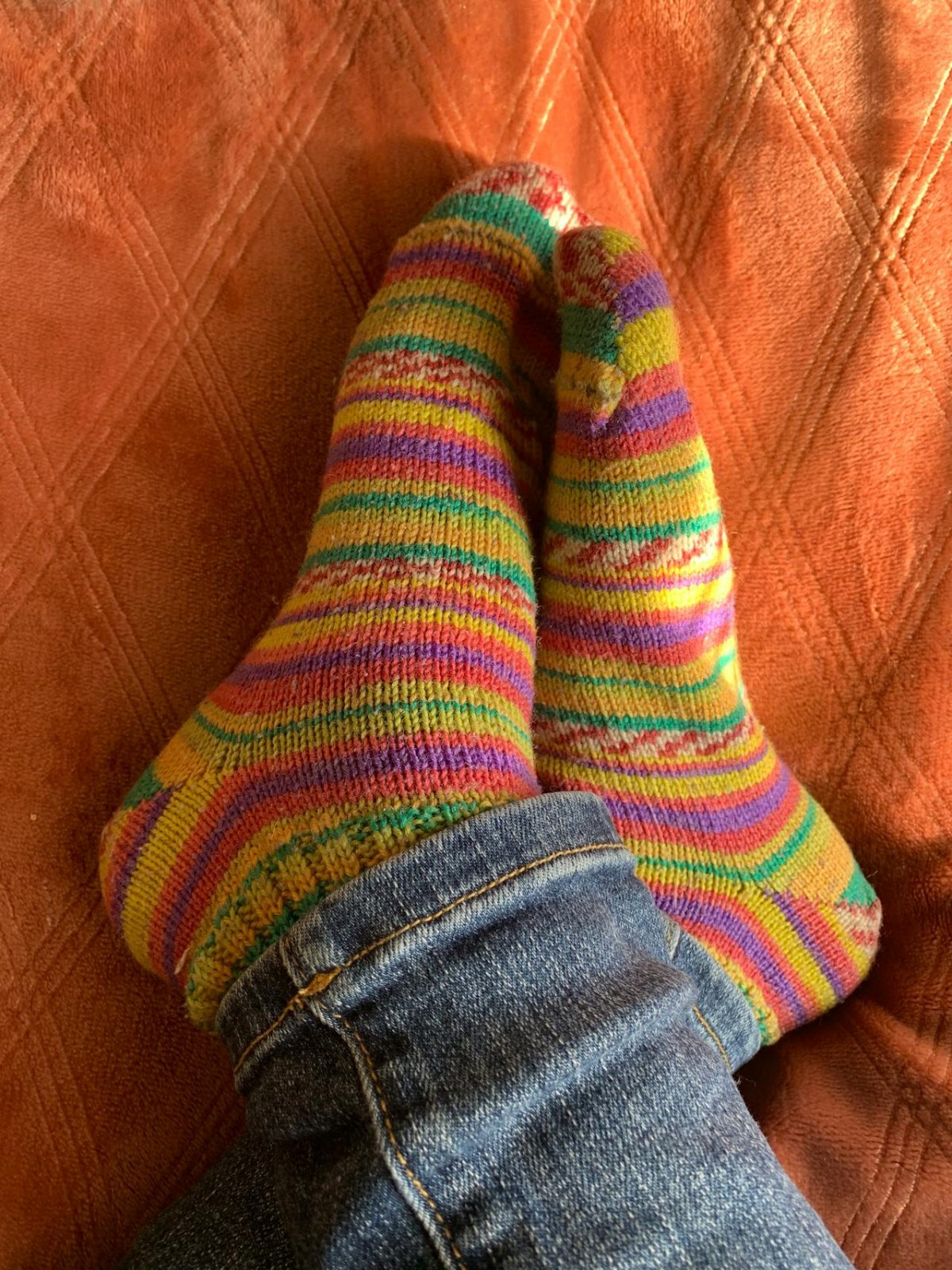
Changing the yarn colour. Works on every machine — simply swap the yarn. Automatic yarn changers make frequent colour changes easier.
Pattern stitches
Fair isle / jacquard
Two colours in one row — the pattern is controlled by a punch card or electronically. The machine automatically selects which needle knits which colour. The unused colour floats across the wrong side (floats). Requires a punch card or electronic machine.
Tuck stitch
Selected needles do not knit — yarn accumulates on them (tuck) and is knitted off together in the next row. Creates a textured, three-dimensional fabric with small bobbles. Popular for blankets and garments. Requires a punch card or electronic machine.
Slip stitch
Selected needles are skipped — yarn floats behind them. Similar to fair isle but simpler — you work with one colour per row, and the effect is created by a combination of slipped and knitted stitches. Requires a punch card or electronic machine.
Weaving
An additional yarn is passed under and over the needles, creating a woven effect. The machine knits with one yarn while the second is "woven" into the fabric. The result is denser and more stable.
Punch card system
A punch card has a grid — each row = one knitting row, each column = one needle. A hole in the card = the needle is active (colour A or stitch). A solid space = the needle is inactive (colour B, tuck, or slip). The card advances automatically row by row.
A standard punch card has 24 columns — the pattern repeats every 24 stitches. This is a limitation — for larger patterns you need an electronic machine.
Electronic patterns
An electronic machine reads the pattern from a computer — no limit on the number of stitches or rows. You draw the pattern in software (DesignaKnit, DAK, img2track) and upload it to the machine. You can knit photorealistic images, large motifs, and patterns spanning the full width of the fabric.