Why Wool Requires Special Care
Wool is an animal fiber covered with scales (like human hair). With improper washing — hot water, vigorous rubbing, or rapid temperature changes — the scales open up, lock together, and the fiber shrinks and felts. A felted sweater becomes smaller, stiffer, and cannot be returned to its original state. This is why proper washing is crucial.
Hand Washing (Recommended)
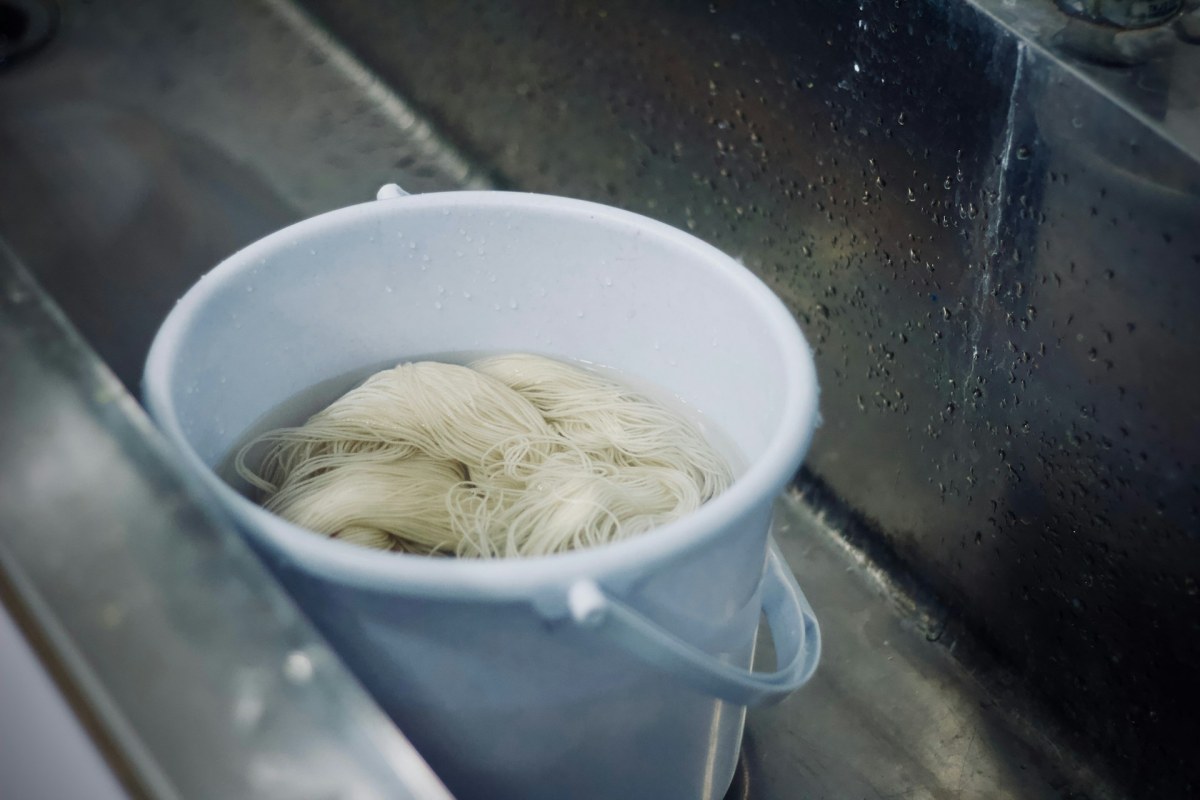
Step 1: Fill a basin or sink with lukewarm water (86°F — pleasant to touch, not hot). Add a small amount of wool detergent (Woolite, Eucalan) or gentle shampoo.
Step 2: Submerge the item and gently squeeze it — don't scrub, twist, or rub. Let it soak for 10–15 minutes.
Step 3: Drain the water. Gently press the item to remove water — DO NOT WRING or twist. Rinse with clean water of the SAME temperature (temperature shock causes felting).
Step 4: Place the item in a dry towel, roll it up, and gently press — the towel will absorb most of the water.
Step 5: Lay flat on a dry towel or drying rack in the correct shape. Never hang — wet wool will stretch under its own weight.
Machine Washing
Only if the yarn is labeled "superwash" (machine washable). Superwash wool has chemically treated scales that won't interlock.
Settings: Wool or hand wash cycle, 86°F, minimal spin (400 rpm), gentle detergent. NO fabric softener — softener damages wool fibers.
Regular (non-superwash) wool does NOT belong in the washing machine — even gentle cycles can cause felting due to mechanical agitation of the drum.
How Often to Wash
Wool has natural self-cleaning properties — lanolin repels dirt and odors. Most wool items only need washing 2–4 times per season. Between washes, simply air out overnight in fresh air.
Drying
Always dry flat — on a flat surface, in the correct shape. For sweaters, lay them out in body shape (shoulders, sleeves). Turn after a few hours. Drying takes 24–48 hours depending on thickness and air humidity.
Never use a dryer — hot air and mechanical tumbling = guaranteed felting.
Never hang — wet wool will stretch and deform. Not on hangers, not on a line.
Storage
Store wool items folded (not on hangers — causes deformation). Place in drawers or boxes with moth protection: cedar balls, lavender sachets, or special products. Moths love wool — especially dirty wool, so wash before storing at season's end.
Rescuing Felted Items
If a wool item has shrunk, try soaking it in lukewarm water with hair conditioner (lots of conditioner) for 30 minutes. Conditioner loosens the fibers. Then gently stretch to original shape and dry stretched. Results aren't guaranteed — it depends on the degree of felting. Heavily felted items unfortunately cannot be saved.
Care by Fiber Type
| Material | Washing | Temperature | Note |
|---|---|---|---|
| Merino | Hand wash (or superwash in machine) | 86°F | Most sensitive to felting |
| Alpaca | Hand wash | 86°F | No lanolin, handle gently |
| Cotton | Machine, gentle cycle | 86–104°F | Won't felt but may shrink |
| Acrylic | Machine | 86–104°F | Durable but may stretch |
| Silk | Hand wash | Cold | Extremely gentle, don't dry in sun |