Why Dye Yarn at Home
Home dyeing allows you to create unique colors and effects that you won't find in stores. You can customize shades precisely to your project, experiment with color gradients, and create one-of-a-kind yarns that exist nowhere else in the world.
What Yarn to Dye
Wool, silk, alpaca (animal fibers) — dyed with acid dyes. White or naturally colored wool dyes most easily. Superwash wool dyes just as well.
Cotton, linen (plant fibers) — require fiber reactive dyes and a different process. More complex procedure.
Acrylic — synthetic fibers practically don't take standard textile dyes. Special dyes exist for acrylic (iDye Poly), but results are unpredictable.
Method: Acid Dyeing Wool (Most Common)
What You Need
Acid dyes (Jacquard, Ashford, Sabraset), white vinegar (as mordant), pot (that you DON'T use for food), water, yarn in hanks, gloves, and plastic wrap/cling film for some techniques.
Yarn Preparation
Wind yarn into hanks and tie loosely in 3-4 places (to prevent tangling). Soak in lukewarm water with a little vinegar for 30 minutes — fibers will open and accept dye better.
Solid Color Dyeing
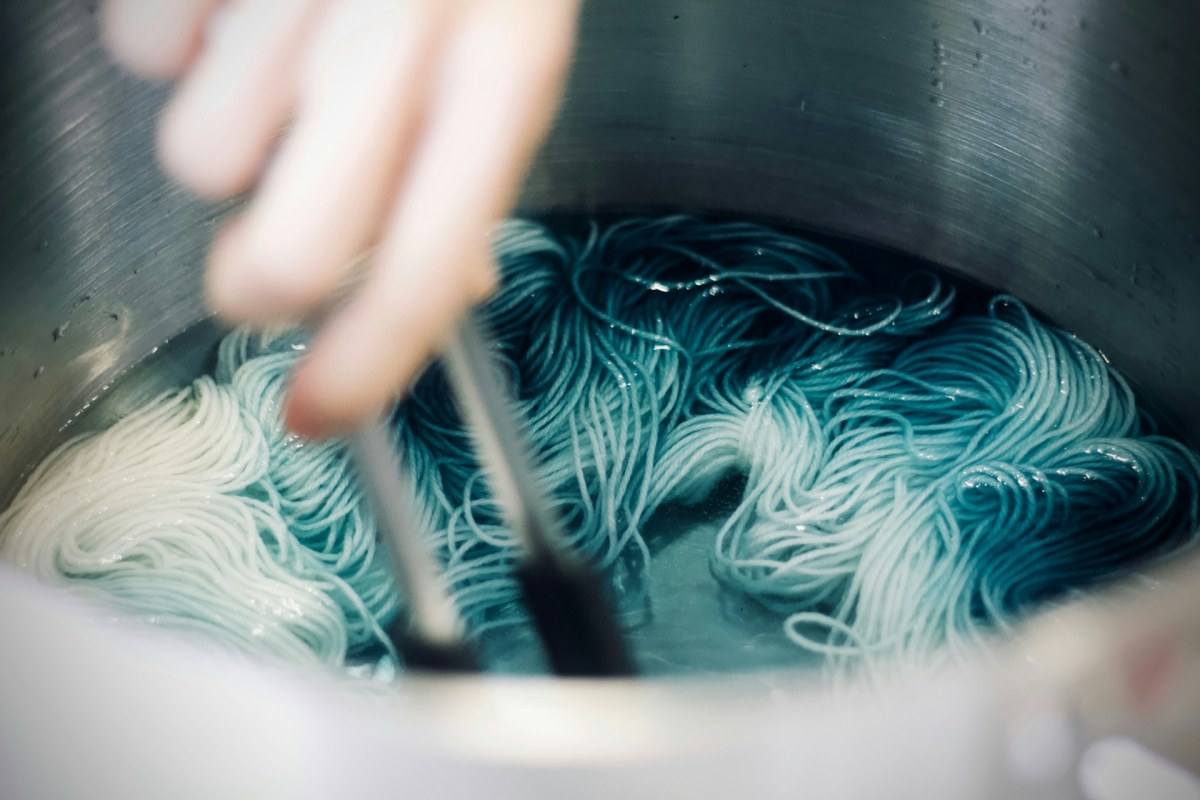
In the pot, dissolve dye in water, add 1/4 cup vinegar per liter of water. Add wet yarn. Slowly heat to 80-90°C (DON'T boil — wool would felt). Maintain temperature for 30-45 minutes until water runs clear (dye has been absorbed). Let cool in water, rinse in clean lukewarm water, dry flat.
Hand Painting
Lay yarn on plastic wrap/cling film. Apply diluted dye from squeeze bottles directly onto yarn — different colors on different sections. Wrap in plastic and steam (over pot of steaming water or in microwave — 2 minutes on, 2 minutes rest, repeat). Heat sets the dye.
Effects
Gradient (ombré) — gradually immerse yarn into dye bath. The section immersed longest will be darkest.
Speckled — spray or sprinkle concentrated dye onto wet yarn. Creates random dots and spots.
Variegated (striped) — painting with alternating colors on laid-out yarn. When knitting, colors alternate at random intervals.
Safety
Acid dyes are relatively safe, but always work with gloves in a well-ventilated area. Pots and tools used for dyeing should NEVER be used for food preparation — dye may not wash out completely. Work on a protected surface — dye stains everything it touches.