What is a Drop Spindle
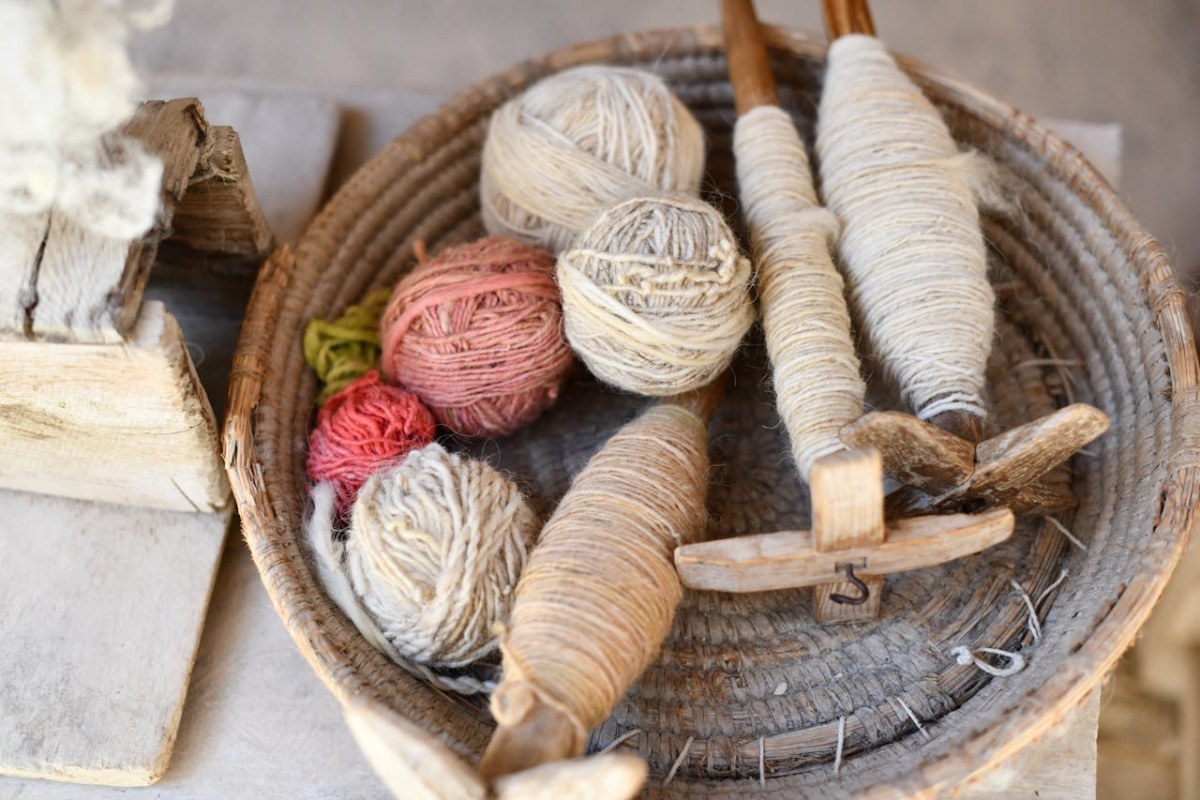
A drop spindle is the oldest tool for spinning fibers into yarn. It's a simple device — a shaft with a whorl (weight) that spins and uses its rotational momentum to twist fibers into yarn. People have been using it for thousands of years, and it remains the most accessible way to start spinning today.
Unlike a spinning wheel, a drop spindle is inexpensive (from $8), portable (fits in a purse), and requires no maintenance. It's ideal for beginners who want to try spinning without a large investment.
Types of Spindles
Bottom whorl spindle — the whorl is at the bottom of the shaft. More stable rotation, longer momentum. Good for beginners and thicker yarn.
Top whorl spindle — whorl at the top. Faster rotation, easier control. Popular for finer yarn.
Turkish spindle — the whorl is formed by two crossed arms. Yarn winds directly onto the whorl and forms a center-pull ball when removed. Elegant and practical.
How to Spin on a Drop Spindle — Process
Step 1: Attaching the Leader Yarn
You need a piece of finished yarn (leader yarn) — about 20 inches. Tie it to the spindle shaft just above the whorl, wrap once around the shaft, and bring it up over the hook or notch at the tip of the spindle.
Step 2: Joining with Fiber
Take a length of prepared fiber (roving) and overlap the end of the leader yarn with the fibers — about 2 inches of overlap. Hold the overlap with your fingers.
Step 3: Spinning the Spindle
Spin the spindle along the shaft with your fingers clockwise (for Z-twist, most common). The spindle spins and twist travels up through the fibers — twisting the leader yarn and new fibers together.
Step 4: Drafting the Fibers
With one hand, hold where the twist stopped (front hand). With the other hand, gently draft fibers from the roving (back hand). Release the front hand — twist penetrates the newly drafted fibers and spins them into yarn. Repeat: draft, release, twist spins.
Step 5: Winding On
When you have about a yard of yarn, stop the spindle, unhook the yarn from the hook, and wind it onto the shaft above the whorl. Hook it again and continue spinning.
Fiber Preparation
Roving / top — combed fiber preparation ready for spinning. Available from yarn shops or fiber producers. For beginners, choose merino or corriedale — they're easy to work with.
Rolags — rolls of carded fiber. Creates airier, softer yarn (woolen spin).
Raw fleece — requires washing, drying, and combing/carding before spinning. For advanced spinners.
Common Beginner Problems
Yarn breaks — insufficient twist. Spin the spindle more and let twist penetrate further into the fibers before you start drafting.
Uneven yarn — thick and thin spots. Normal at first. Focus on even fiber drafting — same volume of fiber in front hand each time.
Spindle spins backward — caught on clothing or stopped rotating and started back. Watch the direction and add spin when rotation slows.
What to Do with Finished Yarn
Handspun yarn must be "finished" — wind it into a hank, tie in several places, soak in lukewarm water for 20 minutes, and hang with a small weight. Once dry, the yarn is ready for knitting or crocheting.