What is a spinning wheel
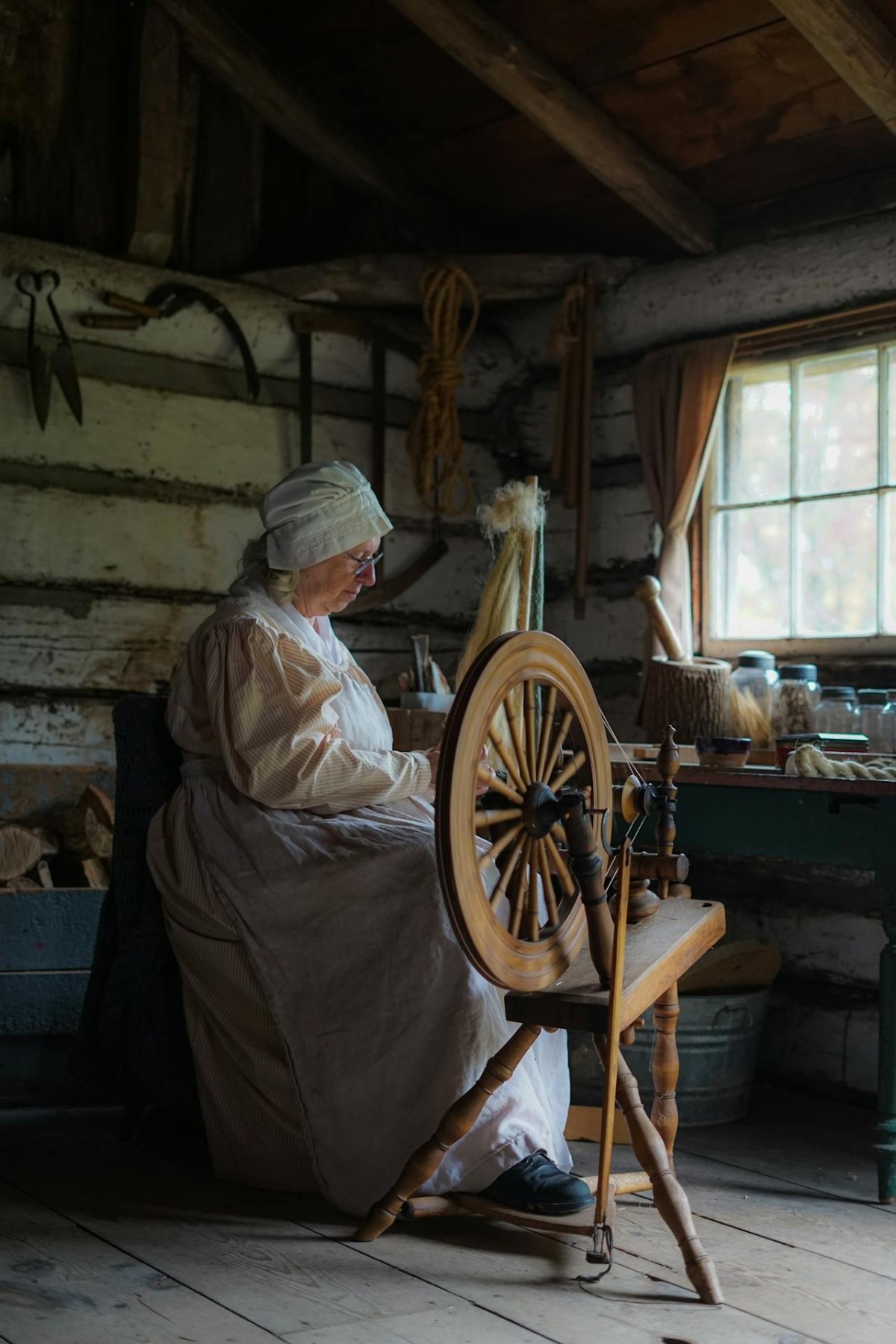
A spinning wheel is a mechanical device for spinning fibers into yarn. Unlike a hand spindle, which you have to keep spinning manually, a spinning wheel maintains rotation through foot pedaling (or electrically). Both hands are free for drafting the fibers. Spinning is faster, smoother, and less tiring.
Types of spinning wheels
Traditional (Saxony wheel)
The classic shape — a large wheel, horizontal construction, with the spindle on one side and the wheel on the other. An icon of fairy tales and historical films. Beautiful, but takes up a lot of space. Modern versions are functional and precise. Brands: Schacht, Kromski, Ashford Traditional.
Castle wheel
More compact — the wheel sits above or below the spindle in a vertical tower. Takes up less space than a Saxony wheel. Popular for home use. Brands: Ashford Kiwi, Lendrum, Schacht Ladybug.
Portable (portable / travel wheel)
Small, lightweight, foldable. Fits in a bag. For spinning on the go, at workshops, and at meetups. Less stable than a full-sized spinning wheel. Brands: Ashford Joy, SpinOlution Mach III.
Electric (e-spinner)
A motor instead of a pedal — you control the speed with a dial or foot pedal. No treadling — ideal for people with limited leg mobility. Compact and quiet. Brands: HansenCrafts miniSpinner, Daedalus, Electric Eel Wheel.
How to choose your first spinning wheel
| Criterion | What to ask |
|---|---|
| Space | How much space do you have? A Saxony wheel needs 80×60 cm, a castle wheel 40×40 cm. |
| Portability | Do you want to carry it around? → portable wheel or e-spinner. |
| Yarn type | Fine yarn? → smooth spindle, high speed. Bulky yarn? → large bobbin system. |
| Budget | Entry level: 3,000–8,000 CZK. Quality: 8,000–20,000 CZK. Premium: 20,000+ CZK. |
| New vs. used | Used spinning wheels (second-hand markets, groups) can be significantly cheaper. Ashford and Schacht maintain quality for decades. |
Basic mechanics
The pedal turns the large wheel, which drives the spindle via a drive band. The spindle rotates and twists the fibers you hold in your hands. The finished yarn winds onto a bobbin. The ratio between the wheel and the spindle determines the speed — a higher ratio means more twist, which means finer yarn.
Most modern spinning wheels have an adjustable ratio (scotch tension, double drive, or irish tension) — allowing you to spin everything from fine lace-weight yarn to thick roving.
Spinning wheel vs. hand spindle
| Feature | Spinning wheel | Hand spindle |
|---|---|---|
| Speed | 3–5× faster | Slower |
| Investment | 3,000–20,000 CZK | 200–1,000 CZK |
| Portability | Limited | Anywhere |
| Learning curve | Hand and foot coordination required | Easier to start |
| Output volume | High | Low |
Recommendations
If you have never spun before, start with a hand spindle (200 CZK) — you will learn the basics of drafting and twist. If spinning grabs you and you want more, invest in a spinning wheel. A good entry-level spinning wheel (Ashford Kiwi, Schacht Flatiron) will last you for years.