What is Carding
Carding is the process of combing raw or washed wool fibers into an even roving from which you can spin. Raw wool after shearing and washing is tangled, full of debris, and matted — carding opens up the fibers, aligns them, and prepares them for spinning.
Carding is one of two methods of fiber preparation — the other is combing. Carding creates an airy, disorganized roving (rolag/batt), from which a soft, airy yarn is spun (woolen). Combing creates a straight, organized roving (top), from which a smooth, firm yarn is spun (worsted).
Carding Tools
Hand Carders
Two wooden paddles with a fine wire surface (similar to a fine dog brush). You place the wool on one carder and comb through it with the other. After several passes, you transfer the fibers back and repeat. The result is a rolag — a roll of combed fibers. Hand carders are inexpensive and suitable for small quantities.
Drum Carder
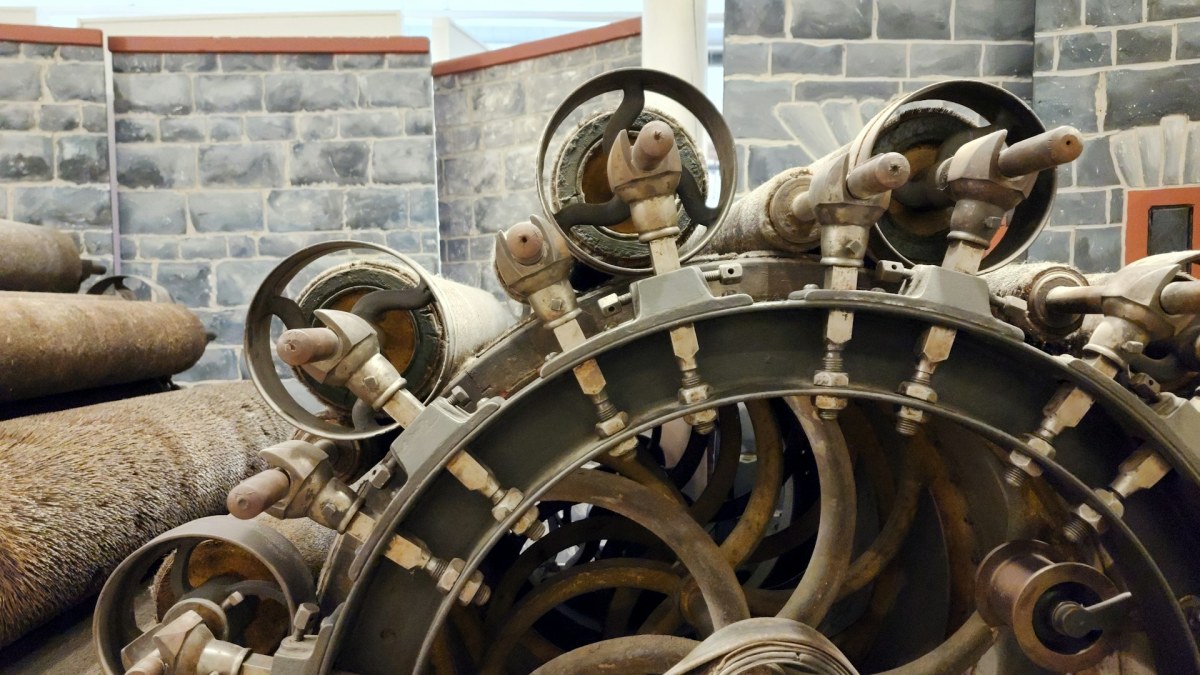
A mechanical device with two rollers covered in a wire surface. Turning the handle combs the fibers between the rollers. The result is a batt — a flat "sheet" of fibers that is rolled into a roving. Faster and more efficient than hand carders.
Hand Carding Process
Step 1: Spread a thin, even layer of wool across one carder (held in the lower hand).
Step 2: Draw the second carder (in the upper hand) across the wool — lightly, just skimming the surface. Direction: from the lower edge of the bottom carder toward the top. The fibers will transfer onto the upper carder.
Step 3: Transfer the fibers back onto the bottom carder — reverse the motion.
Step 4: Repeat 3–5 times, until the fibers are evenly combed.
Step 5: Roll the wool off the carder into a cylinder (rolag) — it is ready for spinning.
Carding vs. Combing
| Property | Carding | Combing |
|---|---|---|
| Result | Rolag / batt (disorganized) | Top (straight roving) |
| Yarn | Woolen (airy, soft) | Worsted (smooth, firm) |
| Short fibers | Retained | Removed |
| Tool | Carders / drum carder | Combing combs |
| Difficulty | Easy | Intermediate–advanced |
Tips
Don't over-card — over-carded wool becomes flat and lifeless. 3–5 passes are enough. Use a fine carder for fine wool (merino) and a coarser one for coarse wool (romney). Make sure the wool is clean and dry before carding — dirty wool will clog the carder.