What is Fair Isle knitting
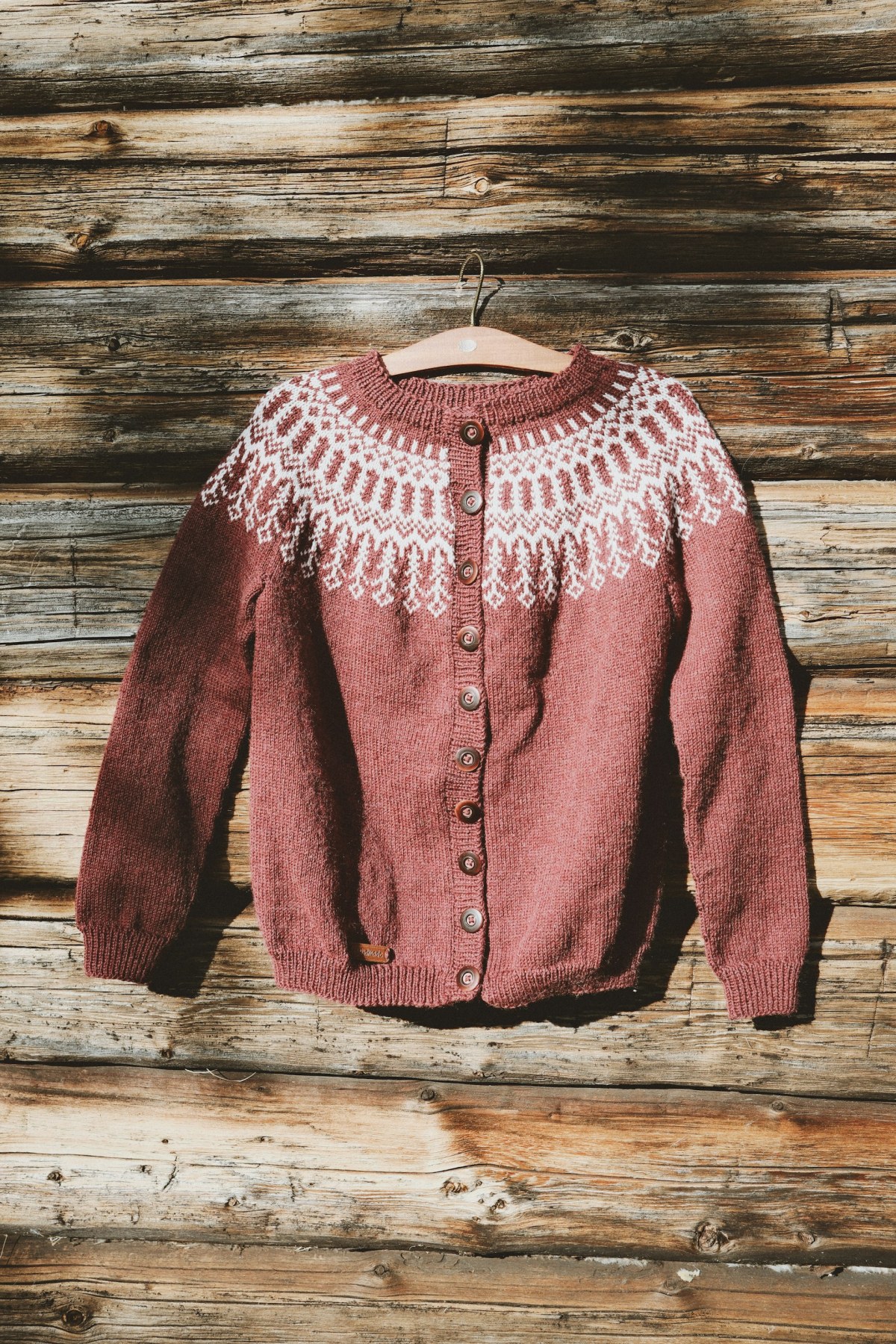
Fair Isle (also called stranded colorwork) is a colorwork knitting technique where you work with two yarn colors in one row — you knit with one color while carrying the other along the wrong side. The name comes from Fair Isle, an island between Scotland and Norway, where this technique was traditionally used for fishermen's sweaters.
Unlike intarsia, where each color has its own ball of yarn, in Fair Isle you continuously hold both yarns and alternate them according to the pattern. The unused yarn "floats" along the wrong side (floating/strands) — which is why the technique is also called "stranded knitting."
Basic principle
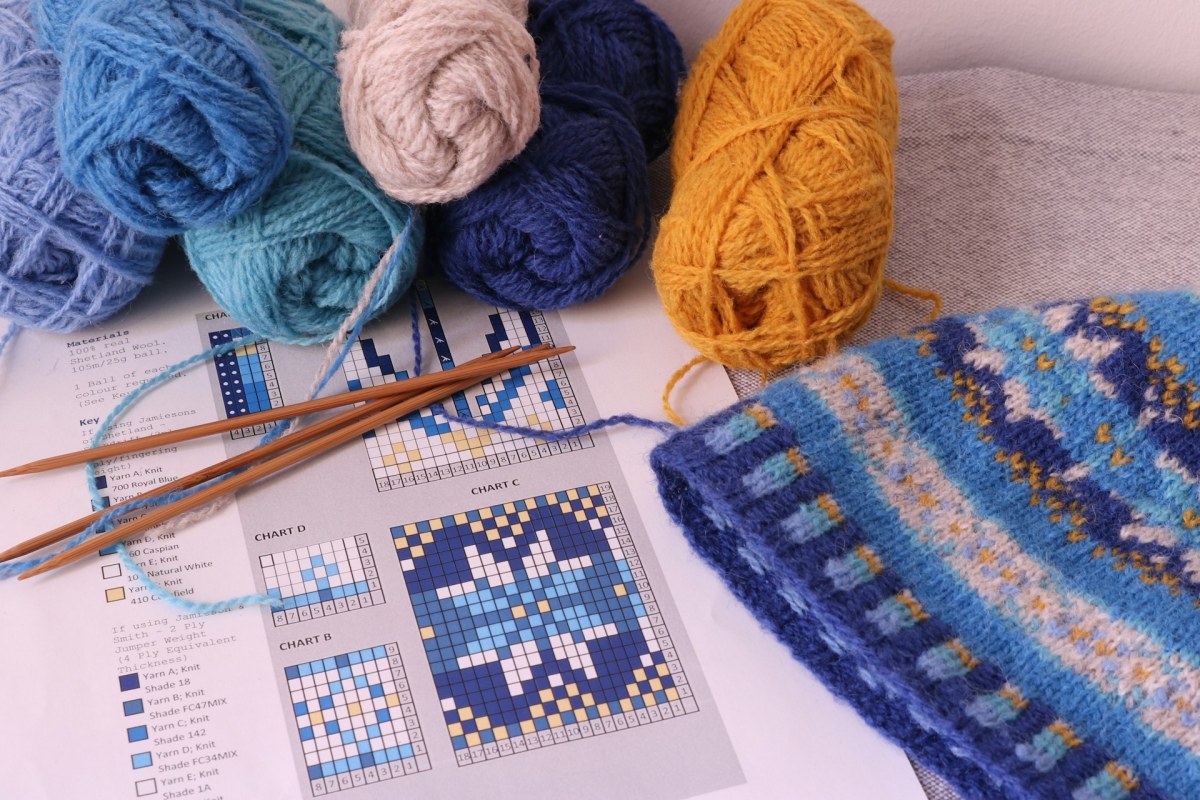
The pattern is read from a color chart — a grid where each square = one stitch, color = yarn color. You knit the right side row from right to left (read chart from left to right for circular knitting, right to left for flat knitting). In one row, you typically alternate sections of 1–5 stitches of one color with sections of the other color.
How to hold two yarns
Method 1: Both in right hand — one over index finger, the other over middle finger. You switch between them. Easier for beginners.
Method 2: One in each hand — dominant color in left hand (continental), background in right hand (English). Fastest method because you don't need to switch yarns. Requires knowledge of both knitting styles.
Floats
The unused yarn floats along the wrong side behind the stitches. Floats should not be longer than 5–7 stitches — otherwise they can catch on fingers when wearing or create irregularities on the right side.
Solution for long floats: Catching — you catch the unused yarn with the working yarn in the middle of the section. Weave the unused yarn under/over the working yarn every 3–4 stitches so the float is anchored to the wrong side.
Tension
The most common mistake in Fair Isle is too tight tension on the floats — the fabric pulls in and puckers. Solution: after each color change, spread the stitches on the right needle so the float has enough length. Fair Isle should be as stretchy as single-color knitting.
Fair Isle vs. intarsia
| Feature | Fair Isle | Intarsia |
|---|---|---|
| Colors per row | 2 (max 3) | Unlimited |
| Pattern | Repeating motifs | Large color blocks |
| Yarn management | Floats | Separate balls |
| Thickness | Double (2 layers) | Single layer |
| Circular knitting | Ideal | Difficult |
Beginner projects
Headband — small circular project with simple pattern (stars, hearts). 30–40 stitches, 10–15 pattern rows.
Hat — classic Fair Isle project. Simple repeating motif around the entire hat.
Fingerless gloves — small project with clear pattern.