What is garter stitch
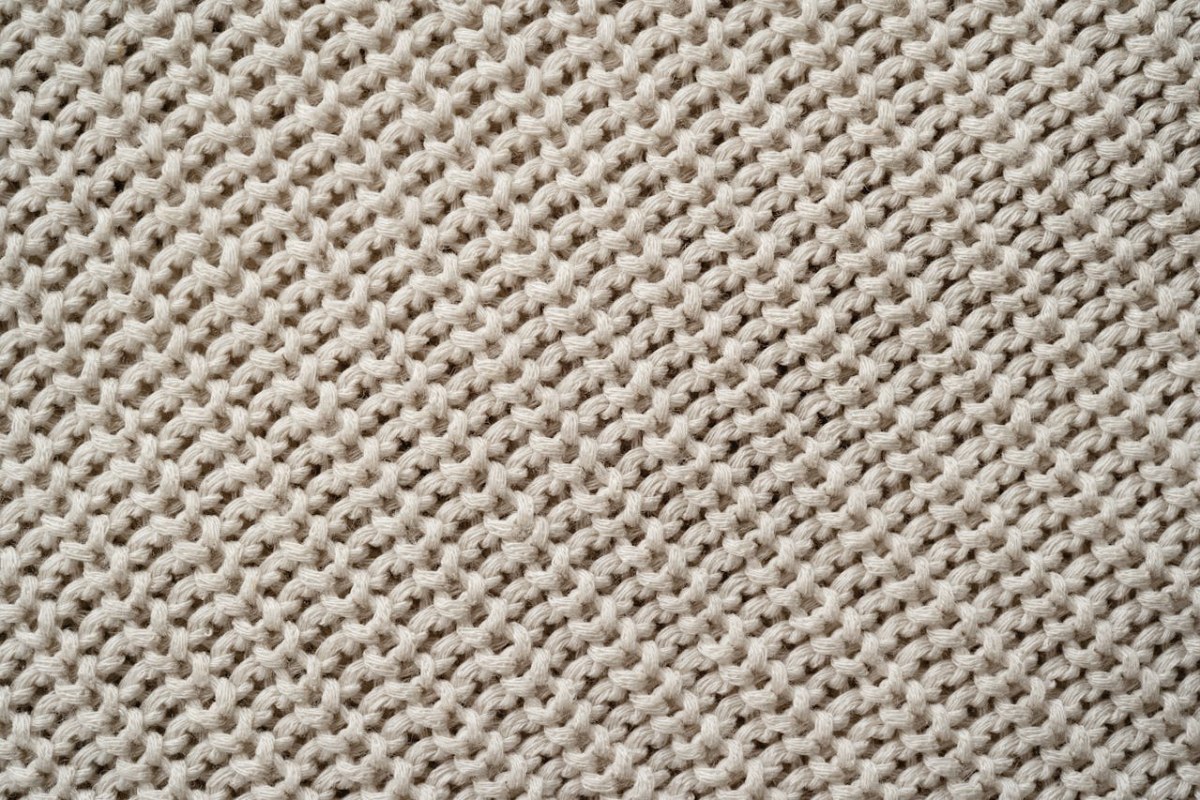
Garter stitch is absolutely the simplest knitting pattern. You knit exclusively knit stitches — in every row, on both sides. No purl stitches, no alternating. It's the first pattern every beginner learns, yet even experienced knitters use it for its unique properties.
The resulting texture is identical on both sides — horizontal ridges (rows of ribs) on both faces. The fabric is stretchy in the vertical direction, doesn't curl, and is thicker than stockinette stitch worked with the same yarn.
How to knit garter stitch
On straight needles: Knit every stitch in every row. Cast on, knit to the end of the row, turn, knit back. That's it.
On circular needles: Alternate rounds of knit and purl stitches — because the work doesn't turn, you need to compensate with purl rounds. Round 1: knit stitches. Round 2: purl stitches. Repeat. This creates the garter texture on the right side.
This is the paradox of garter stitch — it's simpler on straight needles (just knit), but more complex on circular needles (you must alternate).
Properties of garter stitch
Doesn't curl — unlike stockinette stitch, garter stitch doesn't roll at the edges. It's ideal for scarves, blankets, and borders without needing edge patterns.
Reversible — both sides look the same. For scarves and throws, this is an advantage — you don't need to worry about right and wrong sides.
Stretchy vertically — garter stitch stretches in the direction of the rows, not the columns. Stockinette stitch is opposite — stretchy widthwise.
Thicker and warmer — with the same yarn and needles, garter stitch is thicker than stockinette. The rows of knit and purl stitches "stack up" and create a double layer.
Where garter stitch is used
Scarves and throws — the no-curl property and reversible appearance make it ideal for scarves. An entire scarf in garter stitch is the simplest possible project.
Baby blankets — soft, stretchy texture without sharp edges. Safe and comfortable for babies.
Borders and edges — several rows of garter stitch at the beginning and end of stockinette items prevent edge curling. Common on sweaters, vests, and blankets.
Dishcloths and trivets — the thick texture is functional and quick to make.
Stripes in blankets — alternating stripes of garter and stockinette stitch create interesting visual and textural contrast.
Garter stitch vs. stockinette stitch
| Property | Garter stitch | Stockinette stitch |
|---|---|---|
| Method on straights | Only knit stitches | Alternating knit and purl rows |
| Texture | Reversible ridges | Smooth front, bumpy back |
| Curling | No | Yes |
| Stretch | Vertically | Horizontally |
| Thickness | Thicker | Thinner |
| Difficulty | Easiest | Easy |
Tips
Garter stitch uses more rows for the same length than stockinette stitch — factor this in for length-based projects (scarves). If you want garter stitch in circular knitting but don't want to purl, there's a trick: knit on two circular needles or double circulars — after a round of knit stitches, transfer the stitches to the other needle and knit again from the same side.