What is i-cord
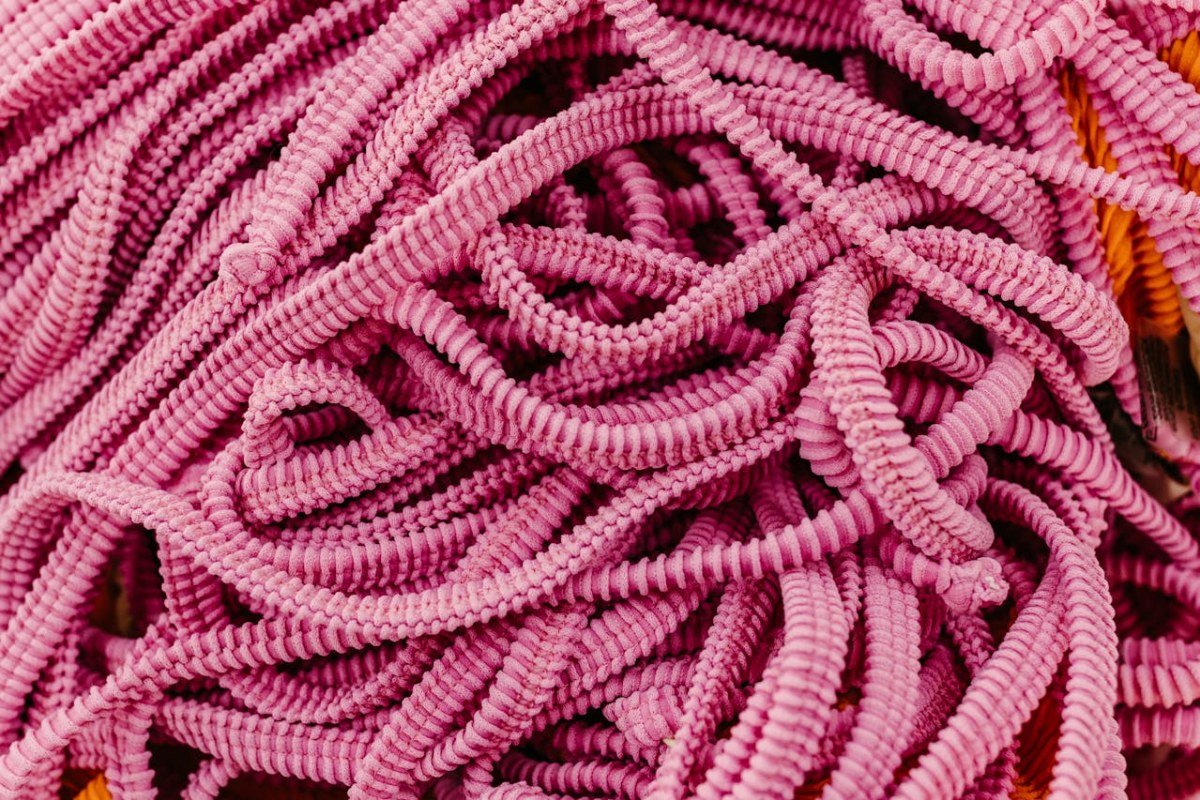
I-cord (short for "idiot cord," named by Elizabeth Zimmermann) is a knitted tubular cord — a narrow tube made with 3-5 stitches knitted on double-pointed or circular needles. It looks like a smooth, round cord — seamless, with no wrong side. It's surprisingly versatile and used in dozens of applications.
How to knit i-cord
Step 1: Cast on 3-5 stitches onto a double-pointed needle (or short circular).
Step 2: Knit all stitches. DO NOT turn the work.
Step 3: Slide the stitches to the other end of the needle (slide from right to left). The yarn is now on the "wrong" side — on the left edge instead of the right.
Step 4: Pull the yarn across the back of the work and knit again. Pulling the yarn across the back closes the tube.
Repeat steps 2-4. After a few rows, the tube will form naturally.
Where i-cord is used
Ties and cords — on hats, bags, or children's sweaters. Instead of store-bought cord, knit i-cord in matching yarn.
I-cord bind off — finishing work with i-cord instead of regular bind off. Creates a decorative rounded edge. Popular on hats, blankets, and pillows.
I-cord edging — i-cord applied along the edge of knitting as decorative finishing. Replaces picking up and knitting an edge.
Laces and straps — for children's shoes, hoods, bags.
Decorative applications — i-cord sewn onto the surface of knitting in the shape of initials, spirals, or ornaments.
Variations
3 stitches — thinnest, round cord. For laces and ties.
4 stitches — medium thickness, most versatile.
5 stitches — flat, wide cord. For edging and bands.
Hollow i-cord (tubular) — on 6+ stitches. Hollow tube that can be filled (with wire for stiffening, stuffing for decoration).
Tips
Pull the yarn at the beginning of each row evenly — too loose pulling creates a visible gap (ladder) on one side of the tube. Use double-pointed needles — on straight needles you can't slide stitches to the other end. Alternatively, there are special i-cord machines (knitting mills / Strickliesel) that produce i-cord mechanically.