What is Stockinette Stitch
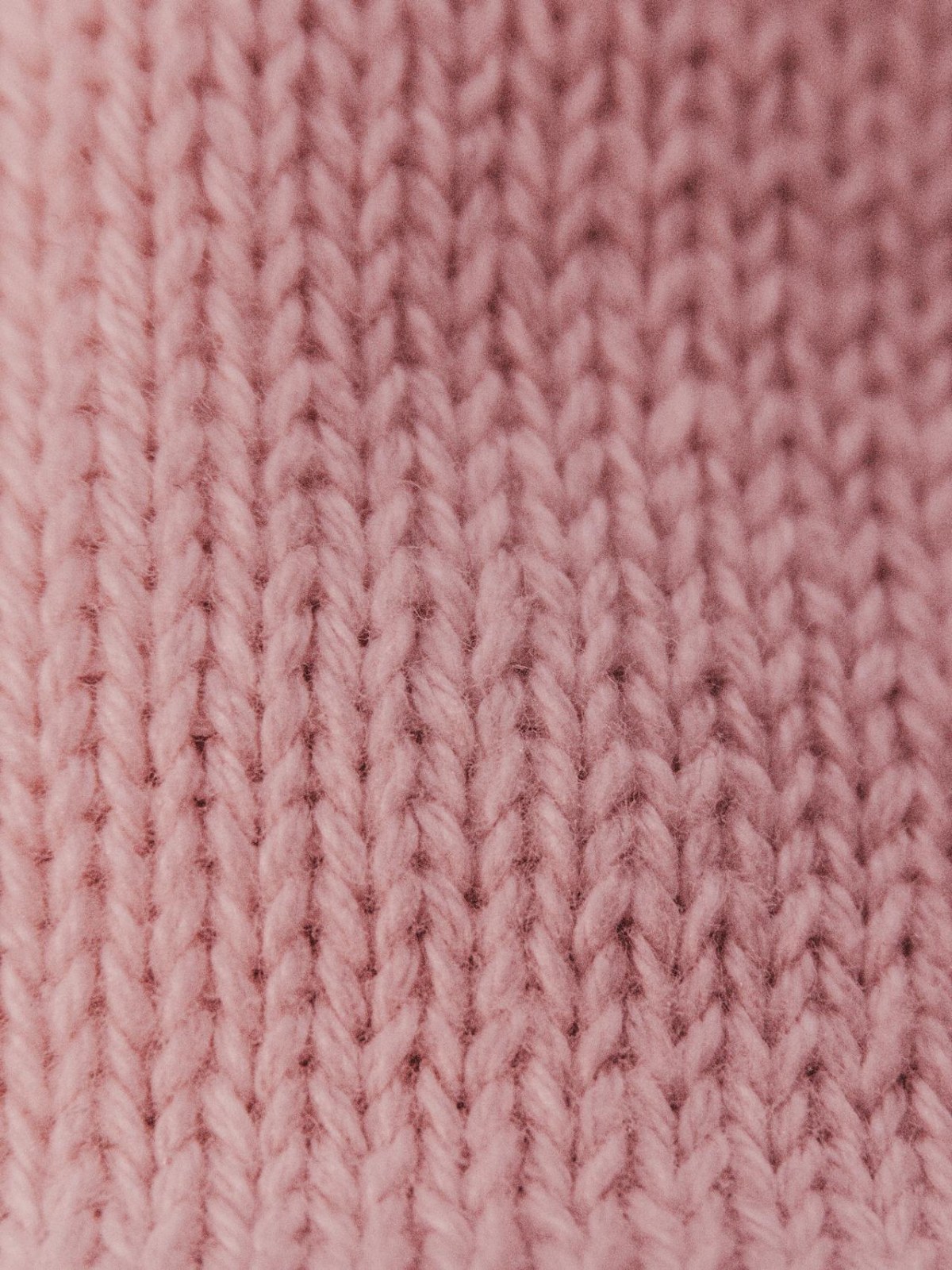
Stockinette stitch (abbreviated St st) is the most basic and widely used knitting pattern. It's created by alternating rows of knit and purl stitches — one knit row, then one purl row, repeated. The result is a smooth right side with characteristic "V" shapes and a bumpy wrong side.
You'll find stockinette stitch in the vast majority of knitted garments — sweaters, hats, socks, scarves, and blankets. It's the foundation upon which all other patterns are built.
How to Knit Stockinette Stitch
On Straight Needles (Back and Forth)
Row 1 (Right side): Knit all stitches — insert needle into stitch from front to back, wrap yarn and pull through new stitch.
Row 2 (Wrong side): Purl all stitches — insert needle into stitch from back to front, wrap yarn and pull through.
Repeat rows 1 and 2. On the right side you'll see smooth "V" shapes, on the wrong side horizontal waves.
On Circular Needles (In the Round)
When knitting in the round, knit only knit stitches — continuously around without turning. Since the work doesn't turn, the right side always faces you and stockinette stitch forms automatically. This is why knitting in the round is easier for hats and socks.
Edge Curling Problem
Stockinette stitch has one disadvantage — edges curl. The bottom and top edges curl toward the right side, side edges toward the wrong side. This is a natural property of the stitch caused by different tension between knit and purl stitches.
Solutions:
Border in different stitch — begin and end with several rows of ribbing (1×1 or 2×2 rib), seed stitch, or garter stitch. These stitches don't curl and "anchor" the stockinette stitch.
Blocking — wet the finished item and stretch to correct shape. Works well with wool and natural fibers, less with acrylic.
Edge stitches — knit the first and last stitch in each row differently (e.g., always purl or always slip) — stabilizes the edge.
Stockinette Stitch Variations
Reverse Stockinette Stitch
The wrong side is used as the right side. The bumpy texture appears more rustic and interesting. Curling is opposite. Sometimes used as a contrasting area next to regular stockinette stitch.
Stripes
Alternating colors every few rows creates stripes. In stockinette stitch, stripes are clean and bold. When changing colors on the right side, the transition is sharp; on the wrong side, a "jagged" stitch may be visible — the solution is to always change colors on knit rows.
Stockinette Stitch vs. Garter Stitch
| Property | Stockinette Stitch | Garter Stitch |
|---|---|---|
| Method | Alternating knit and purl rows | Only knit stitches (both sides) |
| Texture | Smooth right side, bumpy wrong side | Both sides same (ridges) |
| Curling | Yes (edges curl) | No |
| Stretch | Stretches widthwise | Stretches heightwise |
| Difficulty | Easy (2 stitch types) | Easiest (1 stitch type) |
Tips for Perfect Stockinette Stitch
Maintain even yarn tension — uneven tension creates visible irregularities on the smooth surface, which are more noticeable in this stitch than in textured patterns. If your knit and purl rows differ in gauge (rowing out), try using needles one half size smaller for purl rows.